Global warming

SPEAK WEDNESDAY

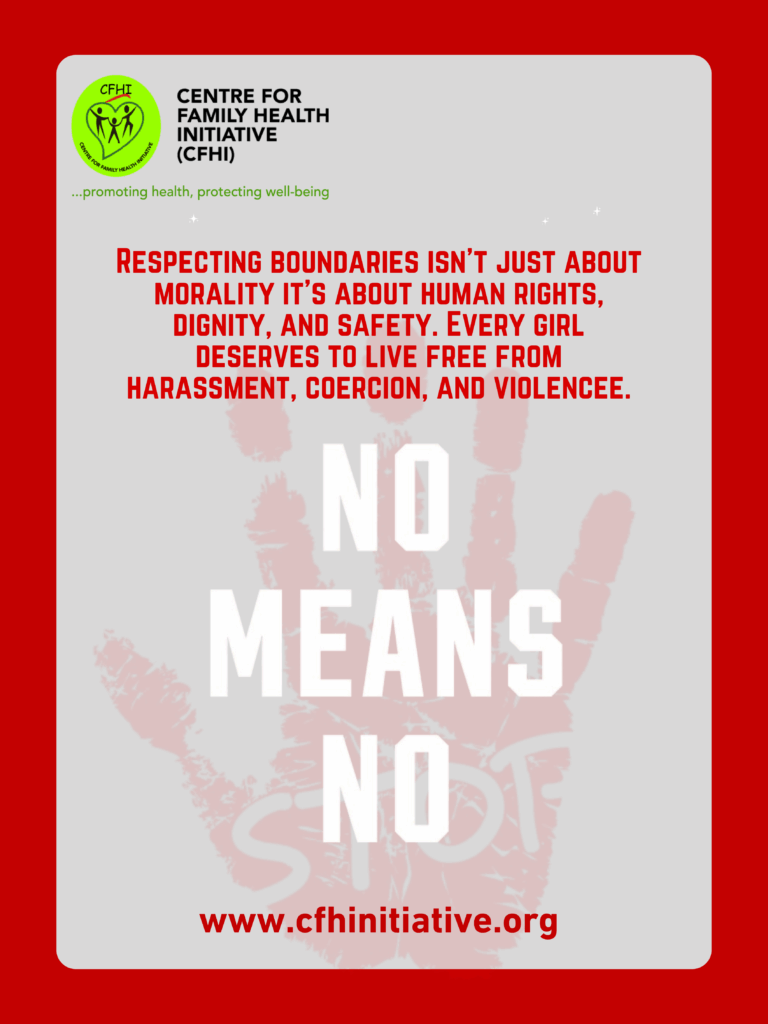
“NO Means NO”

Today, the simple word “No” still struggles to carry the weight it deserves. For many young people, especially girls and young women, saying “no” can come with fear, pressure, or misunderstanding. Yet, “no” should be enough. It is a complete sentence one that should be heard, respected, and never questioned. As we continue to raise awareness around gender equality and safety, understanding the true meaning of consent and personal boundaries becomes essential for building a healthy society.

Consent is more than just permission; it is about respect, autonomy, and communication. It means that every person has the right to decide what happens to their body, their time, and their emotions. Consent must be freely given, not forced, tricked, or coerced. It cannot be assumed from silence or past behaviour, and it can be withdrawn at any time. In relationships, friendships, or social settings, learning to respect a person’s “no” whether spoken or unspoken reflects maturity and integrity.

Unfortunately, the statistics around consent violations remain alarming. According to the World Health Organization (WHO), nearly one in three women globally has experienced physical or sexual violence in her lifetime, most often at the hands of an intimate partner 1. In Nigeria, the National Bureau of Statistics (NBS) reports that many incidents of sexual or domestic violence are never reported, often due to fear of stigma, shame, or disbelief 2. These figures highlight how deeply ingrained gender norms and societal silence can make it difficult for survivors to speak out and for young people to learn what healthy respect truly looks like.

For young girls, learning to say “no” and knowing that it must be respected is an important part of personal development and self-protection. Saying “no” is valid when faced with peer pressure to engage in sexual activity, when uncomfortable with unwanted touching, or when asked to share private information or photos online. “No” is equally powerful in social and emotional spaces: refusing manipulative statements like “If you love me, you’ll do it,” or declining invitations that compromise one’s comfort or safety. Every young person must understand that their voice matters, and their boundaries define who they are.

Equally important is educating boys and young men about consent, empathy, and accountability. True respect means not only hearing “no” but also actively seeking a clear and enthusiastic “yes.” It means understanding that real strength lies in restraint, understanding, and kindness not in control or pressure. When communities, schools, and families foster open conversations about respect and consent, they equip young people with the values needed to build relationships rooted in trust and equality.

Through our gender norms interventions, CFHI empowers young people with knowledge and confidence to challenge and transform harmful gender norms (especially those that disadvantage women and girls) while protecting respect, equality and fairness. Each adolescent club activity, school campaign, and community outreach brings us closer to a society where consent is understood, respected, and upheld where “NO” truly means “NO.

Speak Wednesday is an initiative of CFHI to address issues around gender-base violence and gender-bias.


References

  1. World Health Organization. Violence Against Women: Key Facts. WHO, 2023. Available from: https://www.who.int/news-room/fact-sheets/detail/violence-against-women
  2. National Bureau of Statistics. National Survey on Domestic and Sexual Violence in Nigeria. Abuja: NBS; 2022. Available from: https://nigerianstat.gov.ng/elibrary/read/1241055


SPEAK WEDNESDAY Read More »

MONDAY HEALTH BURST

Early Detection and Lifestyle Choices Against Diabetes

Diabetes has become one of the fastest-growing health challenges globally, claiming millions of lives and affecting countless families. According to the World Health Organization (WHO), more than 537 million adults are living with diabetes, and that number is projected to rise to 643 million by 2030. The International Diabetes Federation (IDF) also notes that one in ten adults currently lives with diabetes, and nearly half are undiagnosed meaning millions are silently living with the condition without receiving the care they need [1,2].

Early detection is a vital weapon in the fight against diabetes. Type 2 diabetes, which accounts for around 90% of all cases, often develops gradually, showing little or no symptoms until complications such as heart disease, kidney failure, or vision loss have already set in. Detecting the disease early allows for timely medical intervention, lifestyle modification, and proper management, which significantly reduces the risk of complications and improves long-term outcomes. Studies have shown that early diagnosis and treatment of diabetes reduce cardiovascular and renal complications and lower overall mortality rates [3].

One of the most remarkable pieces of evidence for prevention comes from the Diabetes Prevention Program (DPP), a landmark study in the United States. The research found that participants who adopted healthier diets, engaged in moderate physical activity for about 150 minutes per week, and achieved modest weight loss reduced their risk of developing diabetes by 58% compared to those who did not make lifestyle changes [4]. This clearly shows that lifestyle choices particularly nutrition, exercise, and maintaining a healthy body weight play a powerful role in preventing or delaying diabetes.

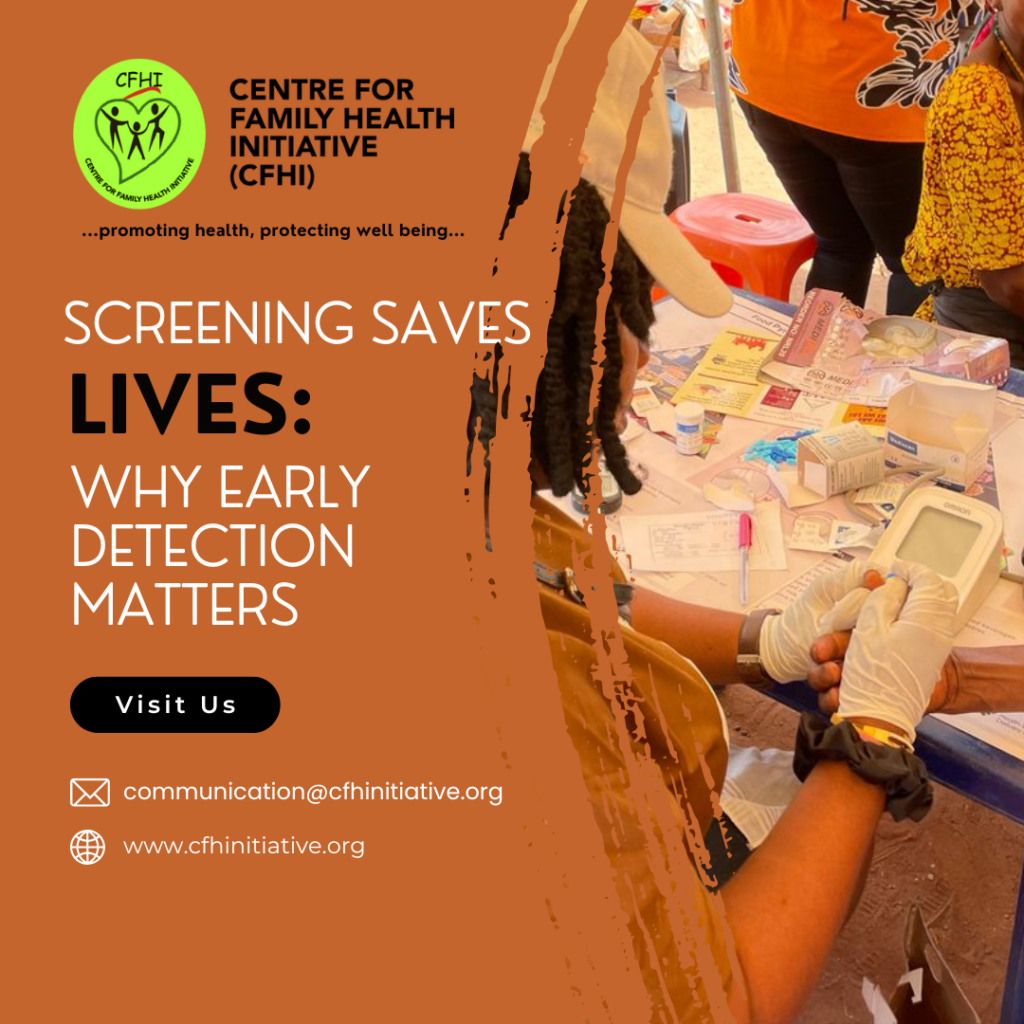
Healthy living begins with awareness. Regular screening for blood glucose levels, blood pressure, and weight helps individuals know their risk status early. The Centers for Disease Control and Prevention (CDC) recommends that adults aged 35 and above, or younger people with risk factors such as obesity, family history of diabetes, or sedentary lifestyle, undergo regular diabetes screening [5]. Screenings should not stop at diagnosis; they should be paired with counseling, education, and access to proper care for effective management. The World Health Organization stresses that integrated care, including screening and education, remains essential for effective diabetes control [6].

In Nigeria, diabetes continues to pose significant public health challenges, driven by persistent rise in medication costs7, limited awareness, unhealthy diets, and rapid urban lifestyle changes. Recognizing this, the Centre for Family Health Initiative (CFHI) has consistently raised awareness about diabetes prevention and care. Through its Diabetes Awareness and Care (DAC) project in Imo state, CFHI has conducted free diabetes screening for over 36,000 persons, alongside health education sessions and outreach campaigns reaching about half a million individuals to encourage early testing and lifestyle change. These community-based interventions mirror global best practices, showing that education and early detection can help prevent diabetes and its complications before they start.

Ultimately, combating diabetes requires a joint effort from individuals, communities, health systems, and the government. While early detection helps identify risks, lifestyle choices, healthy eating, regular exercise, and avoiding harmful habits remain the cornerstone of prevention. As CFHI continues to promote healthier communities through advocacy, education, and screening programs, the message remains clear: diabetes can be managed and even prevented when detected early and addressed with healthy lifestyle choices.

As the world marks World Diabetes Day 2025 under the theme “Empowering Lives Through Early Detection and Access to Care”, it is a timely reminder that diabetes prevention starts with awareness and action. CFHI joins the global community in calling for affordable access to care, increased access to screening opportunities, education, and quality healthcare services for all. Together, we can build a future where early detection saves lives, and healthy lifestyle choices protect generations from the silent burden of diabetes.


References

  1. World Health Organization. Diabetes. Geneva: WHO; 2024. Available from: https://www.who.int/health-topics/diabetes
  2. International Diabetes Federation. IDF Diabetes Atlas. Brussels: IDF; 2024. Available from: https://diabetesatlas.org
  3. Herman WH, Ye W, Griffin SJ, et al. Early detection and treatment of type 2 diabetes reduce cardiovascular morbidity and mortality: simulation and trial evidence. Diabetes Care. 2015;38(8):1449–1455. Available from: https://www.ncbi.nlm.nih.gov/pmc/articles/PMC4512138/
  4. Knowler WC, Barrett-Connor E, Fowler SE, et al. Reduction in the incidence of type 2 diabetes with lifestyle intervention or metformin. N Engl J Med. 2002;346:393–403. Available from: https://www.nejm.org/doi/full/10.1056/NEJMoa012512
  5. Centers for Disease Control and Prevention. Diabetes Screening: Who Should Get Tested and When. CDC; 2024. Available from: https://www.cdc.gov/diabetes/data-research/research/diabetes-screening-eligible.html
  6. World Health Organization. World Diabetes Day: Prevention and Early Detection of Diabetes. WHO; 2024. Available from: https://www.who.int/news-room/events/detail/2024/11/14/default-calendar/world-diabetes-day-2024
  7. Punch Health Wise. Diabetes patients lament as cost of medications rises from N70,000 to N180,000. Available from: (NAN, 2024)


MONDAY HEALTH BURST Read More »

MONDAY HEALTH BURST

IMPACT OF CLIMATE CHANGE ON HUMAN HEALTH

Changes in the overall climate of the planet cannot be over-emphasized. Continuous rise in temperature of the planet is becoming alarming and the root cause is Global warming. Fossil fuels are being continuously used to produce electricity. The burning of these fuels produces gases like carbon dioxide, methane and nitrous oxides which lead to global warming. Also, deforestation leads to warmer temperatures, hence, the hazard of global warming is continuously causing major damage to the Earth’s environment.

According to the Intergovernmental Panel on Climate Change (IPCC) Fifth Assessment Report (AR5) in 2014, the net warming from 1850 to the end of the 20th century was equivalent to nearly 2.5 W/m2 with carbon dioxide contribution about 60% to this figure, methane about 25%, with nitrous oxides and halo-carbons providing the remainder. The major cause of global warming is the greenhouse gases. They include carbon dioxide, methane, nitrous oxides and in some cases chlorine and bromine containing compounds. The build-up of these gases in the atmosphere changes the radiative equilibrium in the atmosphere. The overall effect is to warm the Earth’s surface and the lower atmosphere because greenhouse gases absorb some of the outgoing radiation of Earth and re-radiate it back towards the surface.

Another major cause of global warming is the depletion of ozone layer. This happens mainly due to the presence of chlorine-containing source gases. When ultraviolet light is present, these gases dissociate releasing chlorine atoms which then catalyzes ozone destruction. Many industrial processes produce a wide diversity of aerosols depending on what is being burned or generated in the manufacturing process. These aerosols in the atmosphere also cause global warming by changing the climate in two ways. Firstly, they scatter and absorb solar and infrared radiation and hereby warming the air directly. Secondly, they may alter the micro-physical and chemical properties of clouds and perhaps affect their lifetime and extent.

Effects of climate changes could be very hazardous to human health. Some effects includes; Air pollution and airborne allergens to likely increase, worsening allergy and asthma conditions; climate change including rising temperatures and changes in weather extremes. This will increase health risks and require greater vigilance in food safety practices and regulation because of the exposure of food to certain pathogens and toxins; extreme weather and other events related to climate change will impact health by exacerbating underlying medical conditions like food-borne and waterborne illnesses, and disrupting infrastructures that are essential to maintaining access to health care and emergency response services. Also, climate-related exposures may lead to adverse pregnancy and newborn health outcomes, including low birth weight, preterm birth, dehydration and associated renal failure, diarrhea, and respiratory disease.

Climate action meaning stepped-up efforts to reduce greenhouse gas emissions and strengthen resilience and adaptive capacity to climate-induced impacts is necessary to combat climate change. The most significant solution to put an end to this disaster is the use of alternative energy sources. They include wind, solar, bio mass, geothermal and hydro. The most noteworthy point in using these sources is their clean nature. These sources do not produce any sort of pollution or toxic gases that can lead to global warming. They are friendly to the environment and pose no threat to ecological balance.

Monday Health Burst is an initiative of Centre for Family Health Initiative (CFHI) to tackle issues of basic health concerns. Join us every Monday for more health related articles on all our social media platforms.

MONDAY HEALTH BURST Read More »