International Day of Rural Women

Gender Inequality: A Threat to the Health, Safety, and Rights of Women and Girls in Nigeria

Gender inequality remains a deeply entrenched threat to the health, safety, and rights of women and girls in Nigeria, undermining progress toward equitable development and directly shaping outcomes in health, education, economic participation, political representation, and freedom from violence. According to the United Nations Development Programme (UNDP), Nigeria ranks 147 out of 191 countries on the Gender Inequality Index, reflecting large disparities between men and women in reproductive health, empowerment, and labour market participation. ¹ These inequalities manifest in real and measurable ways that compromise the wellbeing and opportunities of women and girls across the country.

One of the most profound impacts of gender inequality in Nigeria is observed in health outcomes. The maternal mortality ratio remains unacceptably high at 512 maternal deaths per 100,000 live births, indicating that women are still at disproportionate risk during pregnancy and childbirth compared to global averages. ² Factors driving this include limited access to quality reproductive health services, lack of autonomy in health decision-making, and economic barriers that delay care-seeking. Research shows that women who lack financial independence or decision-making power are less likely to utilise antenatal care or deliver in health facilities, increasing the likelihood of preventable complications. ³

Education is another field deeply affected by gender inequality. UNESCO reports that girls’ school completion rates in Nigeria lag boys’, particularly at the secondary level, a gap that translates into reduced opportunities for advanced learning, better jobs, and informed health choices later in life. ⁴ Early marriage, still prevalent in many regions, significantly contributes to school dropout rates among girls. UNICEF estimates that 43% of girls in Nigeria are married before their 18th birthday, limiting educational attainment and exposing them to early pregnancy and increased health risks such as obstetric fistula and maternal mortality. ⁵

Gender-based violence (GBV) is another grave consequence of systemic inequality. The Nigeria Demographic and Health Survey (NDHS) reveals that around 30% of ever-married women aged 15–49 have experienced physical violence, with many cases going unreported due to stigma, fear, and weak legal enforcement. ⁶ Violence affects not only physical health but also leads to long-term psychological trauma, increased vulnerability to HIV infection, and reduced participation in economic and community life. ⁷

Political inequality further illustrates the scale of exclusion. In the current 10th National Assembly (2023–2027), women remain severely underrepresented in national decision-making. Out of 109 Senate seats, only 4 are held by women (approximately 3.7%), while 105 seats (96.3%) are held by men. In the House of Representatives, only 17 out of 360 seats are occupied by women (approximately 4.7%), compared to 343 men. Altogether, women hold just 21 out of 469 seats in the National Assembly, representing about 4.2% of federal lawmakers.¹⁰ This means that despite women making up nearly half of Nigeria’s population, their voice in shaping laws and policies that directly affect their health, safety, and rights remains below 5% — one of the lowest representation rates in the region.¹¹ Limited political participation restricts the advancement of gender-responsive policies and slows progress on critical issues such as maternal health funding, protection from violence, and equal economic opportunities.

Economic inequality further compounds these threats. Although women actively participate in Nigeria’s labour force, wage gaps, informal employment, and occupational segregation persist. The World Economic Forum’s Global Gender Gap Report highlights that women often earn less than men for similar work and remain underrepresented in leadership positions. ⁸ Without economic empowerment, many women are unable to afford essential health services, invest in their education, or break cycles of poverty and dependency.

These disparities are not inevitable; they are shaped by social norms, discriminatory practices, and gaps in policy implementation. Research consistently shows that gender-responsive policies including universal access to reproductive healthcare, enforcement of laws against child marriage, protection from gender-based violence, equal educational opportunities, and increased political inclusion significantly improve health, economic, and social outcomes. ⁹

Addressing gender inequality is therefore not only a moral obligation but also a public health, governance, and economic priority. When women and girls have equal access to education, healthcare, leadership opportunities, and economic resources, maternal and infant mortality decline, household incomes rise, communities become safer, and national development accelerates. Nigeria cannot achieve sustainable development while half of its population remains structurally disadvantaged.

We call on the Federal and State Governments to strengthen and fully enforce laws protecting women and girls from discrimination and violence, expand access to quality healthcare services, promote girls’ education, and implement affirmative measures to increase women’s political representation. Development partners, civil society, and community leaders must intensify advocacy, scale up gender-responsive programming, and challenge harmful norms that sustain inequality. Every sector health, education, justice, governance, and economic development must mainstream gender equity as a foundational principle. The health, safety, and rights of Nigeria’s women and girls demand bold, sustained, and collective action.

References

  1. UNDP Gender Inequality Index
    https://hdr.undp.org/data-center/thematic-composite-indices/gender-inequality-index
  2. WHO Trends in Maternal Mortality 2000–2023
    https://www.who.int/publications/i/item/9789240068759
  3. Journal of Women’s Health – Decision-Making Power & Maternal Service Utilisation
    https://www.liebertpub.com/doi/10.1089/jwh.2020.8805
  4. UNESCO Institute for Statistics – Girls’ Education
    https://uis.unesco.org/en/topic/girls-education
  5. UNICEF – Child Marriage in Nigeria
    https://data.unicef.org/topic/child-protection/child-marriage/
  6. Nigeria Demographic and Health Survey (NDHS)
    https://dhsprogram.com/pubs/pdf/FR379/FR379.pdf
  7. WHO – Violence Against Women Prevalence Estimates
    https://www.who.int/publications/i/item/9789240022256
  8. World Economic Forum – Global Gender Gap Report 2023
    https://www3.weforum.org/docs/WEF_GGGR_2023.pdf
  9. Journal of Gender & Development – Gender-Responsive Policies
    https://www.tandfonline.com/doi/full/10.1080/13552074.2021.1952743
  10. The Nation Newspaper – Women in the 10th National Assembly
    https://thenationonlineng.net/meet-the-only-four-female-senators-in-10th-nass/
  11. The Guardian Nigeria – Women’s Representation in N’Assembly
    https://guardian.ng/news/national/only-4-5-of-nassembly-members-are-women-says-wilan-report/
Gender Inequality: A Threat to the Health, Safety, and Rights of Women and Girls in Nigeria Read More »

Female Genital Mutilation as Gender-Based Violence: A Violation of Girls’ Rights

Female Genital Mutilation (FGM) is a harmful traditional practice and a clear form of gender-based violence that fundamentally violates the human rights of girls and women. The World Health Organization defines FGM as all procedures involving the partial or total removal of the external female genitalia or other injury to female genital organs for non-medical reasons (1). The practice has no health benefits and causes lifelong harm, violating girls’ rights to health, bodily integrity, security, and freedom from cruel, inhuman, or degrading treatment (1).

Globally, more than 230 million girls and women alive today have undergone FGM, spanning at least 30 countries across Africa, the Middle East, and parts of Asia (1). Each year, an estimated 4 million additional girls remain at risk, most of them under the age of 15, highlighting the urgent need for accelerated action (1). These figures reflect not isolated incidents, but a sustained pattern of violence rooted in gender inequality.

FGM persists primarily because of unequal power relations and entrenched social norms that subordinate girls and women. In many communities, the practice is falsely justified as a cultural rite of passage, a prerequisite for marriage, or a means of controlling female sexuality. These beliefs reinforce the notion that girls’ bodies are subject to communal control rather than individual rights, a hallmark of gender-based violence (2).

FGM remains most prevalent in sub-Saharan Africa, with some of the highest rates recorded in Somalia (approximately 99%), Guinea (94.5%), and Djibouti (93%) among women aged 15–49 (3). In Nigeria, an estimated 19.9 million girls and women have undergone FGM, making it one of the countries with the highest absolute number of survivors globally (4). Prevalence varies significantly across regions, with higher rates reported in the South-East and South-West, including states such as Imo, where prevalence exceeds 60% in some communities (4). These statistics underscore how deeply embedded the practice remains at both national and sub-national levels.

As a form of violence, FGM is typically carried out without informed consent, often during childhood, and results in enduring physical, psychological, and social harm. Survivors frequently report anxiety, emotional distress, reduced self-esteem, and loss of bodily autonomy, which can persist throughout adulthood (5). The trauma associated with the experience often affects girls’ confidence, participation in education, and ability to form healthy relationships later in life.

Beyond psychological harm, FGM has serious implications for sexual and reproductive health. It increases the risk of complications during pregnancy and childbirth, contributes to maternal and neonatal morbidity, and places additional strain on already fragile health systems in low-resource settings (1). These consequences further affirm why FGM is recognized globally as both a public health crisis and a human rights violation.

Recognizing its severity, the international community has committed to eliminating FGM under Sustainable Development Goal (SDG) Target 5.3, with a global target year of 2030 (5). Agencies such as the World Health Organization (WHO) and UNICEF have led coordinated efforts focusing on legal reform, community engagement, survivor-centred health services, and prevention strategies that challenge harmful gender norms (6).

At the national level, progress has been uneven. In countries like Somalia, WHO and partners have supported health system reforms, professional training, and community-based interventions to address both FGM and broader gender-based violence (7). In Nigeria, UNICEF has supported community-led abandonment initiatives in high-prevalence states, mobilizing local leaders, families, and youth to protect girls at risk and shift social norms (4).

The impact of FGM on confidence and well-being cannot be overstated. Many survivors live with lasting psychological effects, including post-traumatic stress, fear, and diminished self-worth, which influence education, employment, and social participation (5). These invisible scars are often overlooked, yet they shape the life chances of millions of women and girls.

Ending FGM requires decisive, multi-level action. Governments must strengthen and enforce laws that criminalize the practice. Communities must be supported to challenge harmful norms through dialogue and education. Health systems must provide survivor-centred care, including mental health services. Men and boys must be engaged as allies in promoting gender equality, while robust data systems are needed to monitor progress and guide policy decisions. Only through sustained, coordinated action can FGM be eliminated, and girls’ rights fully protected.

FGM is not culture it is violence. Ending it is not optional; it is an urgent moral, public health, and human rights imperative.

References

  1. World Health Organization (WHO). Female Genital Mutilation.
    https://www.who.int/health-topics/female-genital-mutilation
  2. WHO Regional Office for Africa. Female Genital Mutilation.
    https://www.afro.who.int/health-topics/female-genital-mutilation
  3. UNICEF. New Statistical Report on Female Genital Mutilation.
    https://www.unicef.org/png/press-releases/new-statistical-report-female-genital-mutilation-shows-harmful-practice-global
  4. UNICEF Nigeria. FGM on the Rise Among Young Nigerian Girls.
    https://www.unicef.org/nigeria/press-releases/unicef-warns-fgm-rise-among-young-nigerian-girls
  5. UNICEF DATA. Female Genital Mutilation Statistics.
    https://data.unicef.org/topic/gender/fgm/
  6. World Health Organization. New Recommendations to End Medicalized FGM.
    https://www.who.int/news/item/28-04-2025-who-issues-new-recommendations-to-end-the-rise-in–medicalized–female-genital-mutilation-and-support-survivors
  7. World Health Organization. Addressing FGM and GBV in Somalia.
    https://www.who.int/about/accountability/results/who-results-report-2020-mtr/country-story/2023/improving-maternal-health-outcomes-by-addressing-female-genital-mutilation-and-gender-based-violence-in-somalia


Female Genital Mutilation as Gender-Based Violence: A Violation of Girls’ Rights Read More »

Economic Exclusion as Gender-Based Violence

Gender-based violence (GBV) is most often associated with physical or sexual abuse. However, economic exclusion – the systematic denial of women’s access to jobs, income, assets, and economic decision-making is itself a form of violence that harms individuals, families, and societies. When women are excluded from economic opportunities, the impact goes far beyond loss of income; it restricts freedom, autonomy, safety, and long-term development (1).

At its core, GBV includes economic abuse, where financial control is used as a tool of power and coercion. Economic violence may involve denying women access to money, preventing them from working, confiscating earnings, or restricting access to education and financial resources, forcing dependency and disempowerment (1). In many contexts, economic abuse is one of the most widespread yet least recognized forms of gender-based violence.

Economic exclusion is sustained by discriminatory laws, weak institutional protections, and unequal social norms. Globally, over 2.7 billion women live in countries where laws restrict the types of jobs they can do, and at least 43 economies still lack legislation addressing workplace sexual harassment, creating unsafe and unequal labor environments (2).

Intimate partner violence which frequently includes economic abuse affects approximately one in three women worldwide, limiting their ability to earn, save, and participate fully in public and economic life (3). In South Africa, studies indicate that one in eight adult women has experienced economic abuse, including being deliberately deprived of money or access to financial resources by a partner (4).

The consequences extend beyond individuals to national economies. Gender-based violence, including its economic dimensions, has measurable effects on productivity and growth. Evidence suggests that GBV can cost countries between 1–2% of Gross Domestic Product (GDP) due to absenteeism, reduced productivity, healthcare costs, and forced withdrawal from the workforce (5).

In Nigeria, the economic cost of gender-based violence is estimated at approximately USD 3 billion annually, equivalent to about 1% of the nation’s GDP, underscoring the scale of economic loss linked to women’s exclusion and abuse (6).

Economic exclusion intersects with social norms that treat women as inferior, dependent, or secondary earners. When women lack control over income, are denied access to employment, or are discouraged from education and financial decision-making, the result is structural violence a normalized and persistent denial of rights and well-being.

This exclusion is not accidental; it is deeply rooted in patriarchal systems and discriminatory practices that limit women’s autonomy and participation. The World Bank has emphasized that violence against women undermines economic growth and damages communities and future generations by restricting women’s productive potential (7).

Experts have consistently highlighted both the human and economic costs of this form of violence. According to the World Bank:

“Violence against women and girls is a global epidemic that endangers lives and carries wide-ranging consequences for individuals, families, and communities.” (7)

Research further shows that economic abuse and exclusion lead to long-term psychological harm, loss of independence, and restricted life opportunities for women and girls. Conversely, policies that promote women’s economic empowerment are associated with reduced exposure to GBV and increased participation in education, employment, and leadership (8).

Ending economic exclusion as a form of gender-based violence requires deliberate and sustained action, including:

  • Strong legal protections guaranteeing equal work rights, pay equity, and safeguards against economic abuse.
  • Transformation of harmful social norms that portray women as dependents rather than economic actors.
  • Targeted economic empowerment initiatives that expand women’s access to education, finance, and entrepreneurship.
  • Inclusive workplace policies that ensure safety, fair remuneration, and career advancement for women

Economic exclusion is not merely an economic challenge it is a human rights violation. Recognizing it as a form of gender-based violence strengthens advocacy, accountability, and policy responses, and is essential to building societies where women can live, work, and thrive free from coercion and inequality.

References

  1. Women’s World Banking. What is economic violence against women and why does it matter? Available from:
    https://www.womensworldbanking.org/insights/what-is-economic-violence-against-women-and-why-does-it-matter/
  2. UN Women. Facts and figures: Women’s economic empowerment. Available from:
    https://knowledge.unwomen.org/en/articles/facts-and-figures/facts-and-figures-economic-empowerment
  3. Asia-Pacific Economic Cooperation (APEC). Violence against women: An overlooked economic barrier. Available from:
    https://www.apec.org/press/blogs/2025/violence-against-women–an-overlooked-economic-barrier
  4. Independent Online (IOL). Economic abuse: The most common yet overlooked form of GBV in South Africa. Available from:
    https://iol.co.za/mercury/2025-07-02-economic-abuse-the-most-common-yet-overlooked-form-of-gender-based-violence-in-south-africa/
  5. International Monetary Fund. How domestic violence is a threat to economic development. Available from:
    https://www.imf.org/en/blogs/articles/2021/11/24/how-domestic-violence-is-a-threat-to-economic-development
  6. The Whistler Newspaper. Nigeria loses estimated $3bn annually to gender-based violence. Available from:
    https://thewhistler.ng/nigeria-loses-estimated-3-0bn-annually-to-gender-based-violence/
  7. World Bank. More than 1 billion women lack legal protection against domestic and sexual violence. Available from:
    https://www.worldbank.org/en/news/press-release/2018/02/01/more-than-1-billion-women-lack-legal-protection-against-domestic-sexual-violence-finds-world-bank-study
  8. MDPI. The quest for female economic empowerment in Sub-Saharan Africa and implications for GBV. Available from:
    https://www.mdpi.com/1911-8074/17/2/51

Economic Exclusion as Gender-Based Violence Read More »

When Healthcare Costs Become a Form of Bias

When healthcare costs rise beyond the reach of ordinary people, they silently become a form of bias one that decides who lives, who suffers, and who is forced to endure preventable pain. In Nigeria today, access to quality healthcare is increasingly determined not by need, but by ability to pay. For millions of women and girls, especially in low-income and underserved communities, the cost of care has become a cruel barrier that denies them their most basic right: the right to health. This hidden injustice affects lives, futures, and communities.

The impact of this bias is devastating. Pregnant women delay antenatal care because consultation fees are unaffordable, adolescent girls are denied reproductive health services, and survivors of gender-based violence cannot access timely medical attention due to cost. These barriers fuel inequality, worsen health outcomes, and perpetuate cycles of suffering. When healthcare becomes a privilege instead of a right, women and girls bear the heaviest burden, trapped in a system that marginalizes them and ignores their dignity.

The financial strain of out-of-pocket spending is crushing. Families are forced to choose between food, education, and medical care, often at the expense of women and girls. This reality exposes a health system that has failed to protect those most vulnerable, leaving them at risk of illness, neglect, and further gender-based harm. A functional, responsive healthcare system should uplift women and girls, not push them into vulnerability. Every woman and girl deserve care, respect, and protection regardless of income.

The Nigerian government must act decisively. Investing in maternal, reproductive, and gender-sensitive health services, strengthening primary healthcare, implementing effective insurance schemes, and ensuring accountability at every level are not optional, they are urgent obligations. Health must be treated as a national priority, because no society can prosper while its women and girls remain unwell, unprotected, and underserved. A fair and just society is one where access to healthcare is based on need, not income. Ending cost-driven bias in healthcare requires collective action from policymakers prioritizing women’s health financing, to institutions delivering quality care, to communities demanding equitable systems.

The call to action is clear: the government, stakeholders, and citizens must commit to ensuring healthcare is affordable, accessible, and equitable for all. Healthcare should heal, protect, and empower women and girls, and not discriminate against them. Until costs no longer determine who can access care, gender-based bias will continue to persist quietly, unfairly, and at an unacceptable human cost.

Speak Wednesday is an initiative of CFHI to address issues around gender-base violence and gender-bias.

When Healthcare Costs Become a Form of Bias Read More »

Systemic Barriers to Eliminating GBV in Nigeria

  1. Weak Legal Frameworks and Poor Enforcement

Gender-based violence (GBV) in Nigeria is not only a symptom of individual wrongdoing it is a structural problem rooted in weak laws, uneven adoption of protections, and chronically poor enforcement. To end GBV we must look beyond individual cases and address how laws, institutions and social systems consistently fail survivors.

At the federal level, Nigeria enacted the Violence Against Persons (Prohibition) Act (VAPP), 2015, a comprehensive law criminalizing many forms of GBV. Yet the VAPP is a federal law that must be domesticated (adopted) by state legislatures to take full effect in most states. Domestication has been inconsistent and slow: as recently as 2022–2023 different trackers and reports showed wide variation across states in adoption and implementation of VAPP-style protections. The patchwork adoption means many survivors still lack access to the full.

Even where anti-GBV laws exist, legal gaps remain. Some forms of abuse most notably marital rape are still not uniformly criminalized or enforced across Nigeria. Customary and religious legal systems in many communities treat marital relations as private and beyond criminal law, which results in survivors being denied legal redress. Research and rights reports document how legal definitions, exceptions, and cultural exclusions leave key protections unenforced or unavailable to many women and girls. (Human Rights Watch)

A law on the books means little if enforcement agencies are under-resourced, untrained, or indifferent. Investigations and prosecutions for GBV face multiple obstacles: victims face hostile or dismissive police responses, evidence is poorly collected or stored, and prosecution is slow or lacking. Human rights organizations have repeatedly documented cases in which survivors are shamed, blamed, or pressured to withdraw complaints outcomes that deter reporting and allow perpetrators to act with impunity. (Human Rights Watch)

“Survivors’ experiences show how enforcement failures deepen the harm. Human Rights Watch reported that a lawyer who helped a rape survivor in Enugu was herself assaulted after filing the complaint, exposing hostile treatment by police toward survivors and their advocates. Such incidents discourage reporting and let perpetrators act with near impunity.” (Human Rights Watch, Feb 6, 2020). Human Rights Watch

Effective GBV response requires functioning social services: emergency shelters, forensic and medical support, trauma counselling, and legal aid. In Nigeria these services are often underfunded, unevenly distributed, or run by civil society with precarious support. The result: even survivors who do report rarely receive the wraparound care needed for justice and recovery. Multilateral surveys during the COVID era showed the pandemic worsened women’s safety and access to services an acute example of how weak systems fail under stress.

Official statistics dramatically undercount GBV. Survivors often do not report abuse because they distrust institutions, fear stigma, or lack knowledge of legal options. In turn, poor data collection and fragmented record-keeping between police, health services and civil society hide patterns of violence and make evidence-based policy difficult. The lack of a centralized, trusted data system contributes to weak policy responses. (Human Rights Watch)

Civil society monitoring and journalistic investigations reveal spikes in femicide and intimate partner killings, prompting activists to call for emergency measures. These tragic outcomes are the predictable endgame of weak laws, poor enforcement, and under-resourced prevention and protection systems. Public outrage reflects not only grief but the recognition that structural failures make homes and communities unsafe for many women and girls. (The Guardian)

Reports by national and international organizations converge on several priorities:

  • Full domestication of VAPP-style laws in all states and harmonization with customary/religious systems to ensure survivors’ rights everywhere. (wfd.org)
  • Clear criminalization of all forms of GBV including marital rape and other forms often excluded by law. (Human Rights Watch)
  • Police and judicial reform, including specialized GBV units, survivor-sensitive investigation protocols, and fast-track prosecution for sexual and domestic violence. (Human Rights Watch)
  • Investment in survivor services medical forensic care, psychosocial support, shelters, and legal aid with sustainable public funding and coordination with civil society. (Amnesty International)
  • Robust data systems that unify reporting from police, health facilities and NGOs to produce reliable prevalence and response metrics. (UN Women Data Hub)

Nigeria’s VAPP Act and other legal instruments are important steps, but legal texts without consistent, rights-based enforcement become symbolic rather than transformative.


Bibliography

  • Partners Nigeria — VAPP Tracker (domestication status across states). (partnersnigeria.org)
  • WFD: Impact of the VAPP and related laws in 12 states (2023). (wfd.org)
  • Human Rights Watch — Violence against women pervasive in Nigeria (2019). (Human Rights Watch)
  • UN Women / Measuring the Shadow Pandemic: Violence against women during COVID-19 in Nigeria (2021). (UN Women Data Hub)
  • Amnesty International — Nigeria reports on rights and GBV (2021/2023 reports). (Amnesty International)
  • The Guardian — Activists call for state of emergency over GBV in Nigeria (Feb 2025). (The Guardian)


TO BE CONTINUED…WATCH OUT FOR

NO 2 BARRIER

Systemic Barriers to Eliminating GBV in Nigeria Read More »

SPEAK WEDNESDAY

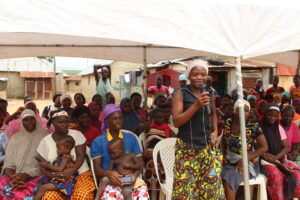
WOMEN DEALING WITH POVERTY IN RURAL AREAS

It is true that a concise and universally accepted definition of poverty has proven elusive because it affects many aspects of human condition. However, different criteria have been used to conceptualize the term “poverty”. Most analysts regard poverty as a function of income levels insufficient for securing basic goods and services.

The 2019 Nigerian Living Standards Survey (NLSS) carried out by the National Bureau of Statistics (NBS) highlights that 40 percent of the total population, or almost 83 million people, live below the country’s poverty line of 137,430 naira ($381.75) per year. The report also shows that 52.1% of rural dwellers in Nigeria are poor, while only 18.04% of urban dwellers are classified as poor. Also, according to data released by NBS, women ranked the highest when it comes to unemployment. The report shows that unemployment hits 12.2 million females as against 9.5 million men.

The fate of Nigerian women living in rural areas is highly appalling considering the patriarchal nature of the Nigerian society and how women are being marginalized in the labor force. The societal disadvantage and inequality they face because they are women shapes their experience of poverty differently from that of men, it increases their vulnerability, and makes it more challenging for them to climb out of poverty. Indeed, more than half of these rural women live below the nationally defined poverty line, lacking access to basic education, decent nutrition, adequate health and social services.  They perform complex multiple roles as mothers, workers and managers of households, taking care of their husbands, children and members of their extended families. They perform the majority of the work in food processing and dominate the rural and urban informal sector activities. Yet an abysmal number of these women own their own farm lands, they have limited access than men to inputs, services, rural organization, agricultural credits, productive infrastructure and technologies to enhance their productivity and incomes.

Women in poor households bear a disproportionate share of the work and responsibility of feeding and caring for family members through unpaid household work. They bear an unequal burden of unpaid, unrecognized, unvalued domestic responsibilities and are overrepresented in informal and risky jobs. Women in poor rural households will often sacrifice their own health and nutrition, or the education of their daughters, by recruiting them to take care of siblings or share in other household tasks.

This lack of investment in the human capital of women propagates a brutal, intergenerational cycle of poverty and hardship that is partly responsible for the persistent nature of poverty. Policies and programs to alleviate poverty must, therefore, take account of gender inequality and gender differences to effectively address the needs and constraints of women. According to the United Nations Women, Women’s economic empowerment is central to realizing women’s rights and gender equality, boosting productivity, increasing economic diversification, and income equality in addition to other positive development outcomes. This economic empowerment could include paid care work (child care, home care, seniors/disabled/palliative care), non-exclusion from inheritance and property ownership, girl child education and scholarships, adult education and scholarships for mothers, continued education during teenage pregnancy, provision of grants,  and many more.

Speak Wednesday is an initiative of Centre for Family Health Initiative to stop the cycle of domestic violence by breaking the silence around gender-based violence and gender bias. Join us every Wednesday on all our social media handles for more episodes.

SPEAK WEDNESDAY Read More »