Health

MONDAY HEALTH BURST

DIABETES AWARENESS AND CARE
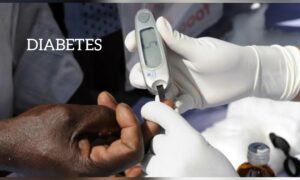
Diabetes mellitus is derived from the Greek word Diabetes, meaning Siphon (to pass through) and a Latin word mellitus meaning honeyed or sweet. This is because in Diabetes, excess sugar is found in blood as well as the urine. It was known in the 17th century as the “pissing evil”.
There are accounts that the term Diabetes was coined by Apollonius of Memphis around 250 BC but Diabetes was first recorded in English, in the form Diabetes, in a medical text written around 1425. It was in 1675 that Thomas Willis added the word “’Mellitus’” to the word Diabetes. This was because of the sweet taste of the urine. The ancient Greeks, Chinese, Egyptians, Indians and Persians had also noticed this sweet taste in urine as it is evident in their literatures.
According to World Diabetes Foundation (WDF), over five million people are living with either Type 1 or Type 2 Diabetes in Nigeria. However, millions are still unaware of their status. The general symptoms of diabetes include increased hunger, increased thirst, weight loss, blurred vision, frequent urination, extreme fatigue, tingling, numbness of hands and feet, itching and yeast infection, wounds and sores that are slow to heal.
Diabetes mellitus is managed in two ways; the non-drug treatment and drug treatment, but it is important to note that education is involved in both ways. People living with Diabetes should be educated on lifestyle modification in the aspects of diet and exercise and on blood sugar monitoring, identifying symptoms, emergencies and complications, medications, and foot care. Also, people without diabetes should be educated on the fact that Diabetes is a lifelong disease with no cure yet. It can be prevented through lifestyle modifications and knowing one’s health status by having regular medical checkups even when you feel healthy.
The first way to manage Diabetes Mellitus which is the non-Drug treatment entails healthy and appropriate diet, adequate physical activities and regular blood sugar and blood pressure checks. The second which is the drug treatment entails the use of oral glycemic tablet and insulin injection. The insulin injection should be administered either alone or alongside oral glycemic tablets for Type 2 Diabetes Mellitus but administered alone for Type 1 Diabetes Mellitus on abdomen, thighs, buttocks, or arms.

Myths and misconceptions about Diabetes
There are many mistaken beliefs about Diabetes; some of these are highlighted below.
• Diabetes is not that serious.
Fact: According to American Diabetes Association, Diabetes causes more deaths than breast cancer and HIV/AIDS combined, people with Type 2 Diabetes (the most common form of the disease) may go a long while, even years, before being diagnosed. This is because, they may downplay their symptoms or write them off to other causes.

• Being overweight causes Diabetes.
Fact: Gaining weight does not necessarily need the person is going to get Type 2 Diabetes. Having a body mass index over 25 is just one of several risk factors for Diabetes, but there are many overweight people who do not ever get the disease.

• Having Diabetes means you must eat foods that are different from everyone else’s.
Fact: People with Diabetes do not need to follow a restricted diet but instead should try to follow the same healthy eating guidelines as everyone else, including choosing foods that are lower in fat, higher in nutrients, and contain an appropriate amount of calories.

• A Diabetes diagnosis means you automatically need Insulin.
Fact: That is the case with Type 1 Diabetes but not with type 2 Diabetes. In some cases, proper diet, exercise, and oral medications, if needed, can keep Type 2 Diabetes under control for some time before Insulin becomes necessary.

• Only older people are at risk of having Diabetes
Fact: Even children are being diagnosed with Type 2 Diabetes. However, those most at risk for Type 2 Diabetes are adults 45 years and older and those of any age who are sedentary and overweight.

Monday Health Burst is an initiative of Centre for Family Health Initiative (CFHI) to tackle issues of basic health concerns. Join us every Monday for more health-related articles on all our social media platforms.

MONDAY HEALTH BURST Read More »

MONDAY HEALTH BURST

DRUG ABUSE

According to Environmental and Public Health Journal in December 2018, drug abuse refers to the use of drugs to treat self-diagnosed disorders or symptoms, and the continued use of a prescribed drug for chronic or recurrent disease or symptoms. It is “the taking of drugs, herbs or home remedies on one’s own initiative, or on the advice of another person, without consulting a medical expert. Also, according to Dr. Ananya Mandal, drug abuse or substance abuse refers to the use of certain chemicals for the purpose of creating pleasurable effects on the brain.

Medical Life Sciences reports that there are over 190 million drug users around the world and the problem has been increasing at alarming rates, especially among young adults under the age of 30. Apart from the long term damage to the body drug abuse causes, drug addicts who use needles are at risk of contracting HIV and hepatitis B and C. Not only does this affect the drug abuser directly, the family members and the society at large are affected negatively in one way or another.

Drug abuse in regards to the usage of antibiotics is reported as being highly prevalent and common in developing nations in Africa, according to World Health Organisation, which can pose a risk to the abuser. Another drug that is constantly abused is Paracetamol and Vitamin C tablet. Research has it that the excessive use of Paracetamol causes the inflammation of the liver and weakens the immune system, and high doses of Vitamin C can cause neurological symptoms, such as tingling and numbness, and possibly permanent nerve damage.

It is essential to consult a medical expert before treating any form of illness. Centre for Family Health Initiative continues to sensitize people especially in rural communities to the dangers ascribed to drug abuse on their health.

Monday Health Burst is an initiative of Centre for Family Health Initiative (CFHI) to tackle issues of basic health concerns. Join us every Monday for more health related articles on all our social media platforms.

MONDAY HEALTH BURST Read More »

SPEAK WEDNESDAY

WOMEN DEALING WITH SEXUAL VIOLENCE

Sexual violence is one of the most pervasive violation of human rights that occurs worldwide. According to the World Health Organizations (WHO), sexual violence is any sexual act, attempt to obtain a sexual act, unwanted sexual comments or advances, or acts to traffic or otherwise directed against a person’s sexuality using coercion, by any person regardless of their relationship to the victim, in any setting, including but not limited to home and work. It is also estimated by WHO that 35 per cent of women worldwide have experienced either physical and/or sexual intimate partner violence or sexual violence by a non-partner (not including sexual harassment) at some point in their lives. Also, some national studies show that up to 70 per cent of women have experienced physical and/or sexual violence from an intimate partner in their lifetime. Evidence shows that women who have experienced physical or sexual intimate partner violence report higher rates of depression, having an abortion and acquiring Human Immunodeficiency Virus (HIV), compared to women who have not.

In 2015, UNICEF reported that one in four girls and one in ten boys in Nigeria had experienced sexual violence before the age of 18. Sexual violence can have psychological, emotional, and physical effects on a survivor which could be immediate, short-term or long-term. Although these effects and repercussion of rape affects victims differently, individuals tend to suffer from similar issues found within the above categories.

In Nigeria, this act of violence against women is often overlooked especially those perpetrated by the spouse. Women and girls living below the poverty line or with fewer resources are at even greater risk of violence. They have no voices in the legal system because they cannot afford the fee unlawfully requested by the police so, many offenders go without prosecution. Also, women who get abused by a relation almost never seek justice because the family involved would rather choose to save the “family name” at the expense of the victim.

According to National Sexual Violence Resource Centre, the acts of sexual violence are under-reported and this may be as a result of inadequate support systems, shame, fear or risk of retaliation, fear or risk of being blamed, fear or risk of not being believed, fear of being socially ostracized, among others. Sexual violence and indeed every other form of violence against women is a major threat to social and economic development because it is inadvertently linked to poverty, lack of education, gender inequality, and maternal ill health. It also impedes national productivity since it occurs among persons in the reproductive age group who have to deal with the adverse physical and psychological consequences of the vice.

As much as the reform of the criminal justice system is an approach to stopping or reducing the occurrence of sexual violence, other approaches may include continuous review of the existing policies and laws on sexual violence in other to accommodate best practices of sexual violence strategies. Building the knowledge base and raising awareness about sexual violence is also essential in curbing this menace.

Speak Wednesday is an initiative of Centre for Family Health Initiative to stop the cycle of domestic violence by breaking the silence around gender-based violence and gender bias. Join us every Wednesday on all our social media handles for more episodes.

SPEAK WEDNESDAY Read More »

MONDAY HEALTH BURST

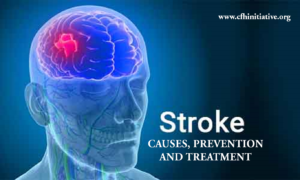
STROKE – CAUSES, PREVENTION AND TREATMENT

According to the World Health Organization (WHO), stroke is defined as a “rapidly developing clinical signs of focal (or global) disturbance of cerebral function, with symptoms lasting 24 hours or longer or leading to death, with no apparent cause other than of vascular origin”. Stroke occurs when there is a sudden interruption of blood supply to the brain, preventing brain tissue from getting oxygen and nutrients.

World Stroke Organization (WSO) stated that 90 per cent of strokes are associated with 10 risk factors that can easily be identified: hypertension, exercise, diet, weight, smoking, alcohol, cholesterol, diabetes, depression and stress, and atrial fibrillation (AF, or AFib). They further stated that 1 in 4 people will develop stroke globally, and 58 percent of all stroke cases happen between the age of 25 and 70 which can be blamed on “modern lifestyle”.  In Nigeria, just like other low and middle-income countries, the primary care services are often limited, leading to high burden of stroke mortality. About 1000 stroke cases are recorded in Nigeria yearly and still counting according to Web Med.

Stroke can be prevented in many ways across all boards, from government and policymakers to healthcare professionals to members of the community. Knowing the signs of stroke is the first step to its prevention. Hence, some of the ways to prevent stroke include increasing awareness, discovering risk factors for stroke and managing them appropriately, implementing population-wide preventive strategies, amongst others.

Over the years, Medical organizations worldwide have been working towards making sure there is improvement in the treatment of stroke. Treatment consists of blood thinners. Early treatment with medication like TPA (clot buster) can minimize brain damage. Other treatments focus on limiting complications and preventing additional strokes like cardiac monitoring (using an electronic device to heart rate and rhythm which can be done at home or in the hospital), carotid endarterectomy (this is a surgical removal of plague built up in the carotid arteries), speech therapy, rehabilitation, physical therapy, the use of natural herbs and supplements, among others.

Early detection will not just save lives but will reduce the effect of stroke. Most people do not check their mental state or relax as they ought to. Adequate medical checkup is essential as it will help to know when rest is needed and when you need to give yourself a break from certain duties.

Monday Health Burst is an initiative of Centre for Family Health Initiative (CFHI) to tackle issues of basic health concerns. Join us every Monday for more health related articles on all our social media platforms.


MONDAY HEALTH BURST Read More »

MONDAY HEALTH BURST

HEALTHY DIETING

According to the Dietary Guidelines for Americans 2015–2020, a healthy eating plan includes eating of fruits, vegetables, whole grains and fat free or low-fat milk and milk products. They are low in saturated fats, trans fats, cholesterol, salt (sodium), and added sugars. While unhealthy diet includes overeating of fatty and greasy food, and of milky products, sweet foods, highly flavoured food, too pungent food, as well as drinking too much alcohol, leading to the formation of Damp-Heat.

Increased production of processed foods, rapid urbanization and changing lifestyles have led to a shift in dietary patterns. People are now consuming more foods high in energy, fats, free sugars and salt/sodium, and many people do not eat enough fruits, vegetables and other dietary fibre such as whole grains. Healthy eating is all about balance. Hence, it is possible to enjoy ones favorite meals, but the key point is eating them less often and balancing them with healthier foods with more physical activities.

Some general tips for healthy dieting include less intake of high-calorie foods and intentionally replace them with lower-calorie versions. Consuming a healthy diet throughout the life-course helps to prevent malnutrition in all its forms as well as a range of non-communicable diseases and conditions.

Monday Health Burst is an initiative of Centre for Family Health Initiative (CFHI) to tackle issues of basic health concerns. Join us every Monday for more health-related articles on all our social media platforms.

MONDAY HEALTH BURST Read More »

SPEAK WEDNESDAY

WOMEN DEALING WITH POVERTY IN RURAL AREAS

It is true that a concise and universally accepted definition of poverty has proven elusive because it affects many aspects of human condition. However, different criteria have been used to conceptualize the term “poverty”. Most analysts regard poverty as a function of income levels insufficient for securing basic goods and services.

The 2019 Nigerian Living Standards Survey (NLSS) carried out by the National Bureau of Statistics (NBS) highlights that 40 percent of the total population, or almost 83 million people, live below the country’s poverty line of 137,430 naira ($381.75) per year. The report also shows that 52.1% of rural dwellers in Nigeria are poor, while only 18.04% of urban dwellers are classified as poor. Also, according to data released by NBS, women ranked the highest when it comes to unemployment. The report shows that unemployment hits 12.2 million females as against 9.5 million men.

The fate of Nigerian women living in rural areas is highly appalling considering the patriarchal nature of the Nigerian society and how women are being marginalized in the labor force. The societal disadvantage and inequality they face because they are women shapes their experience of poverty differently from that of men, it increases their vulnerability, and makes it more challenging for them to climb out of poverty. Indeed, more than half of these rural women live below the nationally defined poverty line, lacking access to basic education, decent nutrition, adequate health and social services.  They perform complex multiple roles as mothers, workers and managers of households, taking care of their husbands, children and members of their extended families. They perform the majority of the work in food processing and dominate the rural and urban informal sector activities. Yet an abysmal number of these women own their own farm lands, they have limited access than men to inputs, services, rural organization, agricultural credits, productive infrastructure and technologies to enhance their productivity and incomes.

Women in poor households bear a disproportionate share of the work and responsibility of feeding and caring for family members through unpaid household work. They bear an unequal burden of unpaid, unrecognized, unvalued domestic responsibilities and are overrepresented in informal and risky jobs. Women in poor rural households will often sacrifice their own health and nutrition, or the education of their daughters, by recruiting them to take care of siblings or share in other household tasks.

This lack of investment in the human capital of women propagates a brutal, intergenerational cycle of poverty and hardship that is partly responsible for the persistent nature of poverty. Policies and programs to alleviate poverty must, therefore, take account of gender inequality and gender differences to effectively address the needs and constraints of women. According to the United Nations Women, Women’s economic empowerment is central to realizing women’s rights and gender equality, boosting productivity, increasing economic diversification, and income equality in addition to other positive development outcomes. This economic empowerment could include paid care work (child care, home care, seniors/disabled/palliative care), non-exclusion from inheritance and property ownership, girl child education and scholarships, adult education and scholarships for mothers, continued education during teenage pregnancy, provision of grants,  and many more.

Speak Wednesday is an initiative of Centre for Family Health Initiative to stop the cycle of domestic violence by breaking the silence around gender-based violence and gender bias. Join us every Wednesday on all our social media handles for more episodes.

SPEAK WEDNESDAY Read More »

MONDAY HEALTH BURST

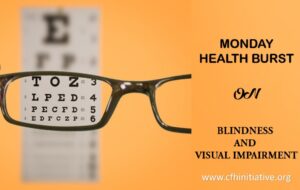
MONDAY HEALTH BURST – BLINDNESS AND VISUAL IMPAIRMENT

Blindness is a complete or partial loss of vision. It is presenting visual acuity of 3/60 or less. Visual impairment on the other hand is often defined as a best corrected visual acuity of worse than 20/40 or 20/60. These could be cataracts, the infectious river blindness, trachoma, glaucoma, diabetic retinopathy, uncorrected refractive errors, and some cases of childhood blindness.

There are variations in the causes of visual impairment across countries. For example, the proportion of visual impairment attributable to cataract is higher in low- and middle-income countries than high-income countries. In high income countries, diabetic retinopathy, glaucoma and age-related macular degeneration are more common. Also, the leading cause of vision impairment among children in low-income countries is congenital cataract, whereas in middle-income countries it is more likely to be retinopathy of prematurity.

The categories of people at risk for blindness include people with eye diseases, such as macular degeneration and glaucoma, people with diabetes, stroke, people undergoing eye surgery, people who work with or near sharp objects or toxic chemicals, and premature babies. However, according to World Health Organization (WHO), more than 1 billion people worldwide are living with vision impairment because they do not get the care they need for conditions like short and far sightedness, glaucoma, cataract in time. This World report on vision by WHO estimates that 80% of visual impairment is either preventable or curable with treatment.

Many people with significant visual impairment benefit from vision rehabilitation, changes in their environment, and assistive devices. In some cases of vision impairment, use of eyeglasses, contact lenses, surgery, and medication may help restore vision, but in the case of irreversible partial or complete blindness, rehabilitation is recommended. Children using glasses are advised to go for medical checkups annually, glaucoma patients for monthly checkups, and people without any confirmed eye problem to go for eye check-up atleast once in 6months.

Monday Health Burst is an initiative of Centre for Family Health Initiative (CFHI) to tackle issues of basic health concerns. Join us every Monday for more health-related articles on all our social media platforms.

MONDAY HEALTH BURST Read More »
SPEAK WEDNESDAY

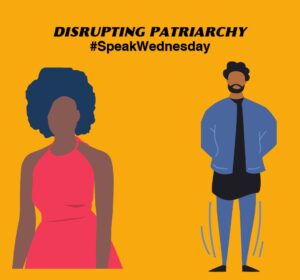
DISRUPTING PATRIARCHY

According to Wikipedia, Patriarchy is a social system in which men hold primary power and predominate in roles of political leadership, moral authority, social privilege and control of property. Some patriarchal societies are also patrilineal, meaning that property and title are inherited by the males only.

Patriarchy influences different areas of the society including culture, family, school, the workplace and relationships. Its presence can translate to inequality and gender-based violence. The idea of patriarchy is not peculiar to a specific group of people, but one that extends and supersedes all borders, socioeconomic class, race, and more.

In Nigeria, it is observed by different researchers including European Scientific Institute that . Hence, there is the commonality of general belief system that the best place for women is in the ‘Kitchen’. This trend has brought about tremendous misrepresentation of women right at the level of the family down to the circular society. Women are therefore discriminated upon from, in most cases, acquiring formal education, accessing proper health care, receiving equal pay, among others.

In so many parts of the world, women are forbidden to own landed properties or inherit any. In cases where the diseased did not have male children, his properties are distributed amongst his male relatives, excluding his widow and daughters who are left to fend for themselves. In these societies, women who are financially stable have to buy properties in the name of their fathers or other male relatives. All these expose women to violence before they are born until they are aged.

Zig Ziglar once said, the first step to finding a solution is to recognize there is a problem. Because of how ingrained patriarchy is in the society, it may be difficult to identify. However, if patriarchy can be learnt, it can be unlearnt. Together we can achieve a society with equal opportunities for all human irrespective of the gender differences.

Speak Wednesday is an initiative of Centre for Family Health Initiative to stop the cycle of domestic violence by breaking the silence around gender based violence and gender bias. Join us every Wednesday on all our social media handles for more episodes.

SPEAK WEDNESDAY Read More »

MONDAY HEALTH BURST

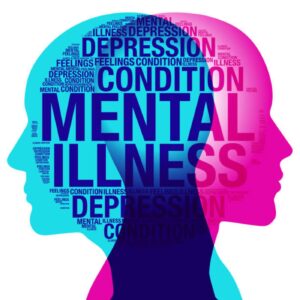
MONDAY HEALTH BURST – MENTAL HEALTH

Mental health according to Oxford Dictionary refers to “a person’s condition with regard to their psychological and emotional well-being.” Wikipedia also defines mental health as “The level of psychological well-being or an absence of mental illness”.

According to World Health Organization (WHO), one in four Nigerians (about 50 million people) are suffering from some sort of mental illness, and as the seventh largest country in the world, Nigeria has Africa’s highest caseload of depression, and ranks 15th in the world in the frequency of suicide. Also, WHO stated in December 2016 that less than 10% of mentally ill Nigerians have access to psychiatrists or health workers.

Mental health issues include and are not limited to mood disorders, psychotic disorder, suicidal thoughts and behaviours, anxiety disorder, post traumatic stress disorder, autism, attention deficit and hyperactivity disorder, eating disorders, personality disorders and many more. Factors that affect mental health can be grouped into biological factors (genetic or heredity factors, injury to the brain, deficits of the brain cause during development in pregnancy and during birth, infection, substance abuse and poor nutrition), psychological factors (emotional and physical trauma, neglect and abandonment) and social factors (poor social interaction, verbal abuse, severe stress or being overworked). These and more are root causes of mental illness according to several reports.

There are some important signs of mental illness that can be observed like prolonged periods of grief, sadness or irritability, extreme highs or low mood swings, increased level of fear, anxiety or worry, withdrawal from society, dramatic changes in daily life habits like eating, exercising, sleeping, and more. When these signs occur, it is important to seek help from a health worker or a psychiatrist because early diagnosis and treatment are essential to speedy recovery.

Maintaining a positive mental health can also be achieved by regular exercise, eating balanced and healthy meals, opening up to people when in tough situations, taking a break when needed, reflecting on beautiful memories or something you are grateful for, and sound sleep. These can help reduce drastically the burden of mental illness in the society.

Monday Health Burst is an initiative of Centre for Family Health Initiative (CFHI) to tackle issues of basic health concerns. Join us every Monday for more health related articles on all our social media platforms.

MONDAY HEALTH BURST Read More »

MONDAY HEALTH BURST

PATIENT SAFETY

The simplest definition of patient safety according to World Health Organization, is the prevention of errors and adverse effects to patients associated with health care.

Unhealthy conditions of the body or mind displace people from the normal state of health thereby deterring their physical or mental wellbeing. It is expected for such individuals to seek out solutions to their health challenges through different means available and accessible to them. Nowadays, people utilize the health services of trained medical practitioners to recuperate and expect that they will be cared for in a safe manner. Unfortunately, there are so many recorded cases of medical negligence resulting in injury or death of patients.

Thomas Agan, the Chief Medical Director (CMD), University of Calabar Teaching Hospital (UCTH), once said during an interaction with journalists in 2017 that over 90 per cent of deaths recorded in Nigerian hospitals are due to poor attitude of health workers. He also mentioned that until healthcare providers are held accountable for every challenge they create, things will not go down well.

Trained medical professionals legally owe a duty of care to their patients. Universally, Medical practitioners are governed by the Hippocratic Oath pledged at serving humanity with optimum capacity. One of the several laws governing medical practice in Nigeria is Medical and Dental Practitioner Act (CAP M8), structured to regulate medical ethics and rules of professional conduct. Infringement of this duty through medical malpractices such as wrong diagnosis and treatment, polypharmacy, defective medical products, and other illegal practices resulting to some form of damage to the patient qualifies as medical negligence. It is pertinent to understand that medical negligence is not exclusive to medical doctors but includes nurses, technicians, pharmacists and other health care providers.

It is no news that a lot of progress needs to be made as a nation in providing an enabling environment with modern and innovative equipment to aid medical practitioners in carrying out their duties. Doctors in government hospitals constantly have to demand adequate remuneration, but some health care providers now use this as facades masking so many cases of medical negligence.

Maintaining patient safety and care requires cooperative effort from all health care providers responsible for patient care. Team work not only provides the safest care but improves medical management especially in diagnosis and treatment of patients. It may not be totally possible to eradicate crisis emanating from medical negligence but, with quality health care work force, the right hospital leadership and management, and the right health care facility and infrastructure, it can be controlled.

Developing active networks of patients and providers, sharing experiences, learning from failure and pro-active risk assessment, facilitating effective evidence-based care, monitoring improvement, empowering and educating patients and the public as partners in the process of care are some of the key factors to consider in achieving a quality agenda.

Monday Health Burst is an initiative of Centre for Family Health Initiative (CFHI) to tackle issues of basic health concerns. Join us every Monday for more health-related articles on all our social media platforms.

MONDAY HEALTH BURST Read More »